Eliminating Deforestation
Forests and other natural ecosystems are critical to the resilience of global supply chains. Forests and other natural ecosystems help mitigate climate risks, improve climate change resiliency, and safeguard biodiversity. They can also provide livelihoods and economic opportunities for communities and Indigenous Peoples connected to forests and natural ecosystems. However, deforestation, forest degradation, and natural ecosystem conversion remain major global challenges, often driven by a complex set of root causes, including poverty, land tenure insecurity, limited resources and knowledge for uptake of good agricultural practices and inconsistent law enforcement.
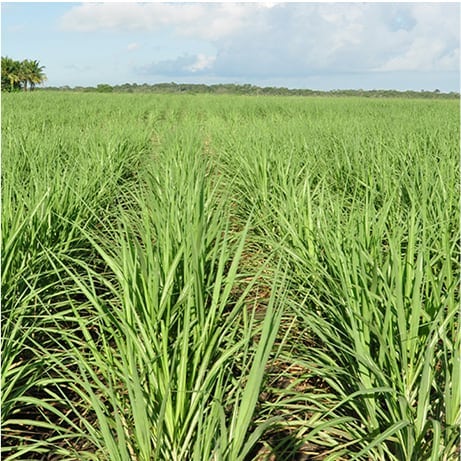
To make the products that delight our consumers, Hershey sources from multiple agricultural supply chains identified as at-risk for driving deforestation, degradation, and conversion: cocoa, palm oil, pulp & paper (packaging), sugarcane, and direct soy. We are committed to taking steps to ensure the long-term resilience of our business and to protect our shared planet.
Our Commitment
Hershey’s approach is guided by our Deforestation & Conversion Free Policy, which aligns with international frameworks, including the Accountability Framework Initiative. Our policy sets clear expectations for suppliers and outlines our timebound commitment to:
- No deforestation or conversion of natural ecosystems after established cut off dates
- Protection of High Conservation Value (HCV) areas and High Carbon Stock (HCS) forests
- Respect for human rights, including the rights of Indigenous Peoples and local communities, and Free, Prior and Informed Consent (FPIC)
- Ongoing due diligence, monitoring, and remediation where risks are identified
We are working toward our 2030 target, recognizing that addressing deforestation and conversion requires sustained, collaborative action across complex supply chains.
How We Are Implementing Our Commitment
Our DCF Implementation Approach describes our approach and supply chain-specific due diligence processes to assess compliance with our DCF Policy.
Supply Chain Mapping and Risk Assessment
Supply chain mapping is foundational to understanding where our ingredients come from and identifying and managing deforestation and conversion risks. We continue to strengthen our ability to trace materials to origin and assess risk at different tiers of the supply chain.
Key elements include:
- Advancing traceability toward mill, farm, or equivalent points of origin depending on commodity and context
- Conducting material flow analyses to verify segregation and traceability controls
- Applying risk-based due diligence to prioritize suppliers, geographies, and landscapes for deeper action
Supplier Development
Our suppliers are critical partners in enabling a more resilient supply chain. Hershey recognizes the importance of collaboration while ensuring the local knowledge of farmers and communities are taken into account as critical context.
We set clear requirements through our policies and Supplier Code of Conduct, and partner with suppliers to strengthen implementation over time. This includes:
- Integrating DCF requirements into our Supplier Code of Conduct
- Conducting supplier assessments and reviews of internal traceability systems, documentation, and controls
- Supporting continuous improvement through corrective action plans, technical assistance, and capability building
- Engaging suppliers as long-term partners, informed by local context and farmer realities
Monitoring, Verification and Remediation
We use a combination of technology and on-the-ground engagement through suppliers and partners to monitor and address deforestation and conversion risks.
This includes:
- Satellite monitoring and geospatial analysis to identify potential forest loss near supplier sourcing areas
- Field assessments and verification, conducted with suppliers and implementation partners
- Case management approaches to investigate alerts, engage suppliers, and drive remediation where issues are confirmed, guided by our Grievance Procedure for Potential Violations of our DCF Policy
We work with partners like Sourcemap and Earthworm Foundation and Airbus’s Starling satellite to support monitoring and response to deforestation alerts in our in-scope supply chains.
Landscape and Conservation Partnerships to Restore and Protect Nature & Biodiversity
We recognize that deforestation and conversion cannot be addressed through supply chains alone. In high-risk regions, we invest in landscape-level and on-the-ground initiatives that support forest protection, restoration, and community resilience and seek to maintain large natural ecosystems intact so that they continue to be able to perform critical services.
Mabi-Yaya Nature Reserve, Côte d’Ivoire –
The Mabi-Yaya Nature Reserve is one of Côte d’Ivoire’s last remaining intact tropical rainforests, is home to the critically endangered Western chimpanzee, and provides crucial ecosystem services to the surrounding area. Since 2023, Hershey has been investing $1 million over three years in its conservation, in partnership with the Foundation for Parks and Reserves of Côte d’Ivoire (FPRCI). The project aims to restore deforested areas, patrol the reserve’s borders, monitor wildlife, and strengthen community engagement in its long-term management.
Kakum National Park, Ghana
Kakum National Park is a biologically rich rainforest bordering cocoa-growing communities and provides crucial ecosystem services to the region. 2025 marked the beginning of the third, three-year phase of our $500,000 investment. The project is a collaboration with ECOM, the Kakum Consortium, and national and local government agencies. By supporting local committees to strengthen landscape governance, the project aims to prevent farmers from encroaching on protected forest areas. It also supports the sustainable harvesting of kombo nuts—an ingredient used by the natural cosmetics industry—and other botanical products, effectively integrating work to protect biodiversity with investment in community livelihoods.
Lobu Tayas Village Forest, Indonesia
Through the Forest Conservation Fund, Hershey’s investment supports local communities in establishing formal village forest management rights, enabling the protection of approximately 10,000 hectares of forest, while allowing sustainable livelihoods through non timber forest products and conservation-based land management
Lesan River Forest, Indonesia
Through the Forest Conservation Fund, Hershey’s investment supports joint forest patrols between the government and the community as well as planting fruit trees on the edges of the forest to secure the health of the local Orangutan population and safeguard the future of this biodiversity hotspot.
Arbor Day Foundation
Since 2017, Hershey’s partnership with the Arbor Day Foundation has restored forest habitats across the U.S., planting more than one million trees and restoring more than 2,300 acres of forest.
Transparency and Reporting
We are committed to transparency and continuous improvement. We report annually on our progress, challenges, and learnings through our Responsible Business Report and other public disclosures, and we continue to refine our approach as expectations, science, and regulation evolve.
Definition & Cut-Off Dates:
Deforestation & Conversion Free volumes are the product volumes we source from our direct suppliers and are assessed to have been produced on land that has not been subject to deforestation or conversion after the cut-off date, as determined by following commodity-specific DCF methodology, aligned to the Accountability Framework initiative.
Our cut-off dates are as follows:
- Cocoa: December 31, 2020
- Palm Oil: December 31, 2015
- Pulp & paper: December 31, 2020
- Sugarcane: December 31, 2020
- Soy (direct): December 31, 2020