| |
|
|
 |
 |
|
 |
 |
Hershey's Commitment to Responsible Cocoa Growing
Child Labor and Cocoa Growing in West Africa
It’s been over three years since media reports first
appeared claiming widespread child labor abuses in West African cocoa
farming. Much has happened since then, both in establishing a more accurate
picture of working conditions in the region and in harnessing industry,
international government and development agency efforts to foster social,
economic and environmental development across the region.
A Better Understanding of How Cocoa is Grown
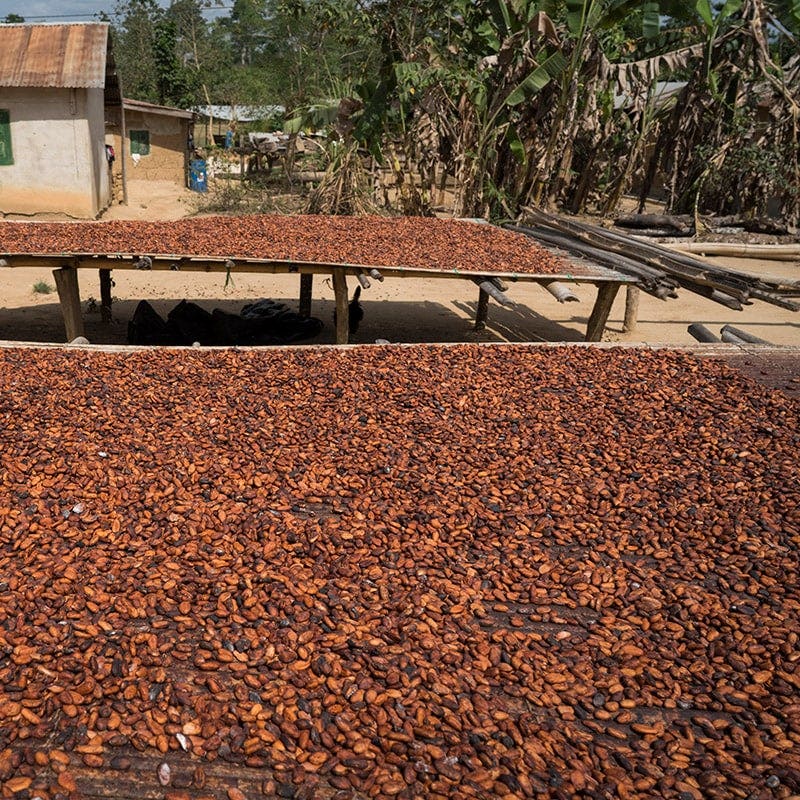
Today, West Africa is the leading source of cocoa, growing
70 percent of the world’s supply. The Ivory Coast is the single largest
producer, at 36 percent of the total, with Ghana, Cameroon and Nigeria being
the other major West African producers. The cocoa is grown on over 1.5
million small family farms … typically between 7 and 17 acres … many of which
are located in remote areas of these countries.
It’s no surprise that establishing a clear picture of
working practices on such a large number of farms is extremely difficult. At
the time media stories of abusive child labor practices first appeared,
little was known beyond the fact that children helped with the farm work, a
typical practice in rural communities both in developing and developed parts
of the world.
Today, thanks to a landmark, independent survey conducted in
2002 by the International Institute for Tropical Agriculture (IITA) in
cooperation with the International Labor Organization of the UN (ILO) and
funded by The Hershey Company and other industry members, we have a clearer
picture of actual working conditions on these farms. Contrary to media
reports, the survey found that the vast majority of farmers in the region
grow cocoa responsibly; no instances of slavery or forced labor were found
on the more than 4,500 farms surveyed. The survey did identify several areas
where change is needed, including lack of access to education and farm
safety issues involving machete use and pesticide application. But the clear
picture that emerged was far different from initial media reports.
Building Awareness and a Firm Commitment
Understanding actual working conditions on West African
cocoa farms was an important first step. However, The Hershey Company and other
industry members moved well beyond this to support the establishment and
enforcement of appropriate labor standards in cocoa growing.
A key element of this effort was the Harkin-Engel Protocol
that establishes a series of date-specific steps aimed at providing
consumers with assurance that the chocolate and cocoa products they buy are
not produced with the worst forms of child labor. Since its signing in 2001,
a number of key steps have been accomplished, including the establishment of
the International Cocoa Initiative Foundation whose mandate is to eliminate
the worst forms of child labor and forced labor in cocoa growing. The ICI,
whose board includes representatives of industry, international labor, child
rights and anti-slavery organizations, currently is finalizing its long-term
strategy and will focus its efforts on building awareness and compliance
with international labor standards at the community level.
The final step to be delivered under the Protocol timetable
is the implementation of standards of public certification that cocoa has
been grown without the worst forms of child labor, due by July 1, 2005. This
is the most challenging step in the Protocol, involving the first-ever
establishment of a certification process for a crop grown in the developing
world. With support from the ILO, work on the design of this certification
system … including independent monitoring and verification as well as an
international reporting process … already is well underway, with model
testing scheduled for the upcoming harvests this year and roll-out in the
Ivory Coast and Ghana in time to meet next year’s deadline.
Equally important in establishing appropriate labor
standards has been industry’s support for sustainable cocoa growing. This
commitment dates from the late 1990s when Mars, The Hershey Company and other
companies joined with the US Agency for International Development (USAID),
CABI Bioscience, the International Cocoa Organization, IITA and farmer
groups to promote improved cocoa farming practices in West Africa.
Whether through improved pest and disease management, better
harvesting and fermentation practices or greater awareness of world market
prices, the program’s goal is to reduce costs and improve incomes for cocoa
farmers not only in West Africa, but in Asia and Latin America as well – a
win/win for the farmers and the chocolate industry.
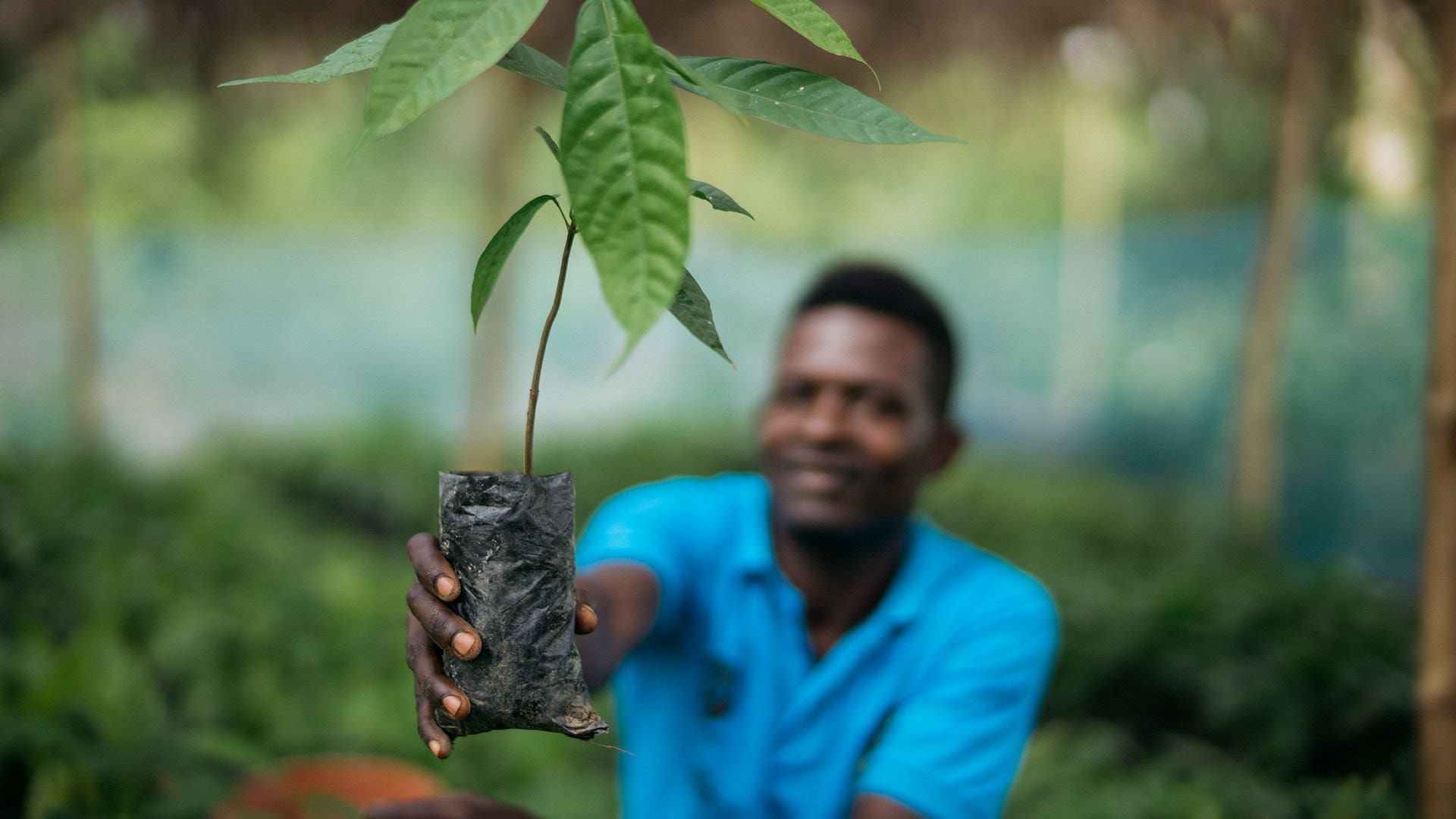
This effort has taken the form of the Sustainable Tree Crops
Program in West Africa where it was launched in 2000 and now is underway
with a series of pilot projects in the Ivory Coast, Ghana, Cameroon, Nigeria
and Guinea (cashews). Industry partners include USAID, IITA, US Department
of Labor, the ILO, the Canadian and German international development
agencies, CARE International, the World Bank, host country farmer
cooperatives, and many others.
The pilots are designed to last three years and test the
best ways to drive economic, environmental and social improvement in the
cocoa-growing regions of these countries. While final results won’t be
available until next year, clear successes have been achieved. Radio
messaging already is communicating the importance of appropriate labor
standards to often-remote farming communities in Ghana, with plans for
expansion in the Ivory Coast. Progress is being seen in providing vocational
education opportunities, a clear need for young people ages 9 to 15. And
Farmer Field Schools are proving a tremendous tool for teaching farmers
across the region about labor standards and improved farming methods.
A Model Public-Private Partnership
Today, these various efforts comprise a “model”
public-private partnership aimed both at improving the lives of the millions
of people who depend upon cocoa for their livelihood and at assuring
consumers that the cocoa in their favorite confectionery products has been
grown responsibly. This is not a short-term effort; it will take time and
the sustained commitment of The Hershey Company and its industry partners if we
are to drive meaningful change in the lives of cocoa farming families around
the world. However, much already has been achieved, as awareness of
international labor standards becomes better established and farm-family
incomes improve in a sustainable manner which isn’t dependent upon
artificial pricing schemes.
You can learn much more about our commitment to responsible
cocoa growing from two industry newsletters published on this subject over
the past year:
http://www.chocolateandcocoa.org/Library/Newsletters/default.asp
You also can learn more about sustainable cocoa growing from
the World Cocoa Foundation at:
http://www.worldcocoafoundation.org
We’ll also keep you informed of progress over the coming
months. In the meantime, should you have questions, please
contact us at:
Consumer Relations
The Hershey Company
PO Box 810
100 Crystal A Drive
Hershey, PA 17033
- or -
Call Toll-free:
1-800-468-1714
Weekdays 9:00 AM to 4:00 PM EST
|
|
|
|
 |
|
|
|